
Born Flapping: The Independent Greyhound Racing Scene
When me Mam found out she was pregnant with me, her first thought was, so it wasn’t that gas leak what made me sick, closely followed by I’ll be forty years old and I hope our Fly’s alright with the baby. ‘Fly’ was me brother David’s greyhound, a fawn bitch with a white chest and powerful legs that’d carried her to victory in many a race. Trained by me Dad with a handmade trap and a ball, she showed early pace that would make the legendary Pestana look pedestrian. But unlike Pestana or greyhounds racing at the likes of Sunderland and Towcester, Fly lived in our house. When she wasn’t out training, she’d be stretched out next to my cot, watching over me as I slept.
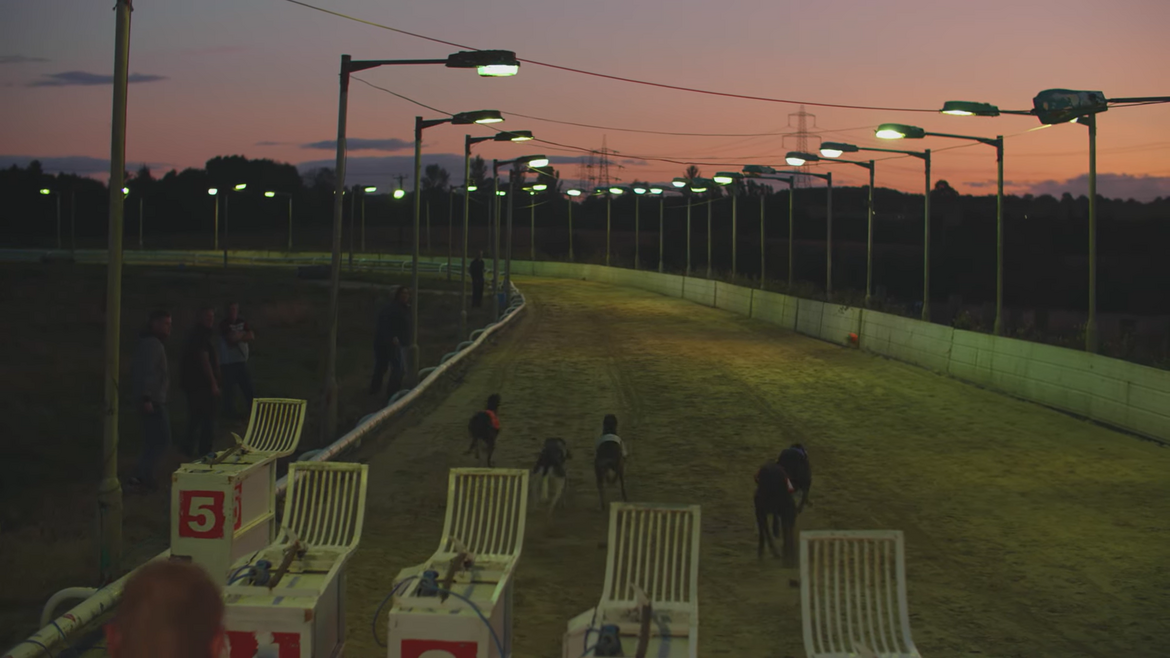
To anyone familiar with the Greyhound Board of Great Britain’s rules over the kennelling of racing greyhounds, it sounds like there was a breach of licence going on. But this was the early nineties, and Fly was one of the many dogs who raced on the independent circuit. Also known as ‘flapping tracks’, they’d been operating outside the jurisdiction of greyhound racing’s regulatory body since the 1920s. While they adhered to strict alcohol and gambling licensing laws, they were much more relaxed about the people and the dogs they hosted: anyone could run a greyhound at a flapping track.
From the valleys of South Wales to Scottish villages, they attracted crowds of working-class men and women – and my family were among them. We went to the East Durham tracks, which were packed with newly-redundant miners and former factory workers like me Dad. Having learnt the hard way that there was no hope of a job, everyone had set their sights on something much more achievable: winning a few bob off the bookies. With strong betting rings and cards packed full of handicap races, there were opportunities galore for those who could train their dogs to take them.
Which meant mornings full of long walks and dinnertime trips to The Swim; after-school visits to The Gallop, or a hill half a mile from home. Watching me Dad soak the Wafcol while me Mam made our tea, or spending a summer’s evening swilling off shampoo. Feeling the winter wind cut through me hand that held the grooming brush, or rushing through the night to check we’d put the muzzle and the jacket in the car. Badgering me Dad to let me walk the dog on with him, and promising me Mam that I’d be good, and swearing down dead to me brothers that I wouldn’t tell anyone there was a gamble on.
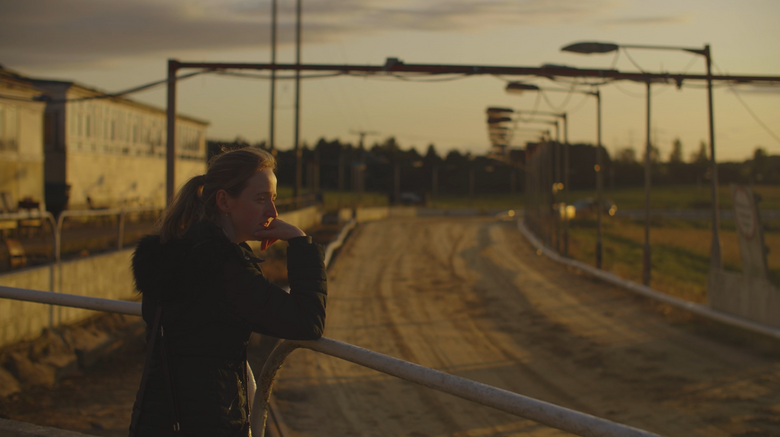
You can bet your bottom dollar that I roared me throat red raw once the hare was on the move, and in a way I’m still shouting even now the tracks are gone. I highlight the independent circuit through my work as a professional writer because its people and its dogs are too important to be lost to time. I started with a short essay about my childhood memories in Kit de Waal’s acclaimed anthology Common People (2019), and was then commissioned to make the short art film This Place is Going to the Dogs (2019), which unknowingly captured tracks now lost to housing developments and arson. Another commission saw me standing in a Morrison’s car park which had been built over the site of a flapping track for the art film This Used to be A... (2021), before I took the listener to a race night in the BBC Radio 4 Extra audio drama The Pitmen Flappers (2022).
Soon after the BBC broadcast, I went through a rigorous application process to become a GBGB licensed trainer, and trialled my greyhound Right Paddy at Newcastle and Sunderland. Yet while I take baby steps into the licensed circuit, I remain committed to honouring flapping tracks through my writing. The first of my trilogy of flapping novels won the prestigious Sid Chaplin Northern Writers’ Award 2023. Represented by Elise Middleton at YMU Literary, the book is due to go out on submission to editors and independent publishers in early 2024.
Thanks to an Arts Council National Lottery Project Grant, April 2024 will also see the release of a podcast series which I’m working on with esteemed audio editor Bridget Hamilton. ‘Dogpeople’ expands on a successful pilot episode to create a social history of County Durham flapping tracks in the words of the people who went to them. The project will also see community events and a non-fiction book proposal. Combined with film and TV ideas, I hope to create a substantial body of work which preserves the heritage of the independent circuit for future generations, and celebrates the stories of people who, like me, were born flapping.
Dr Louise Powell
Dr Louise Powell is an award-winning working-class writer from Middlesbrough. Her scripts have been performed at nine theatres and broadcast on BBC Radio 4 Extra. She has been commissioned to write three short films, two podcast series and the non-fiction book Coal Face. She is the winner of the Sid Chaplin Northern Writers’ Award 2023 and the joint winner of the Peter Lathan Prize for Playwriting 2022
 We will protect your personal information.